Is a Ground-Floor Hotel Room Less Safe or Just More Convenient?
A ground-floor hotel room is not automatically unsafe, and an upper-floor room is not automatically secure. The meaningful differences usually involve how easily outsiders can approach the room, whether windows or patio doors open directly to accessible areas, how much privacy the room provides, and how quickly you could leave during an emergency. For some travelers, the convenience of avoiding elevators and stairs may outweigh those concerns.
The better question is not simply whether the room is on the ground floor. It is whether the room’s specific location, doors, windows, surroundings, and emergency routes fit your needs and comfort level.
Quick answer
- Ground-floor rooms can be more convenient for travelers with limited mobility, heavy luggage, strollers, or frequent trips in and out.
- They can also have more exposure to sidewalks, parking areas, gardens, patios, pools, and other publicly accessible spaces.
- Windows and exterior doors matter more than the floor number alone. Check that every opening locks properly and that curtains provide full privacy.
- Emergency access can favor a lower floor. A shorter route to an exit may be valuable for travelers who have difficulty using stairs.
- You can ask to change rooms. If a ground-floor location makes you uncomfortable after you inspect it, contact the front desk and request another available room.
Why some travelers are cautious about ground-floor rooms
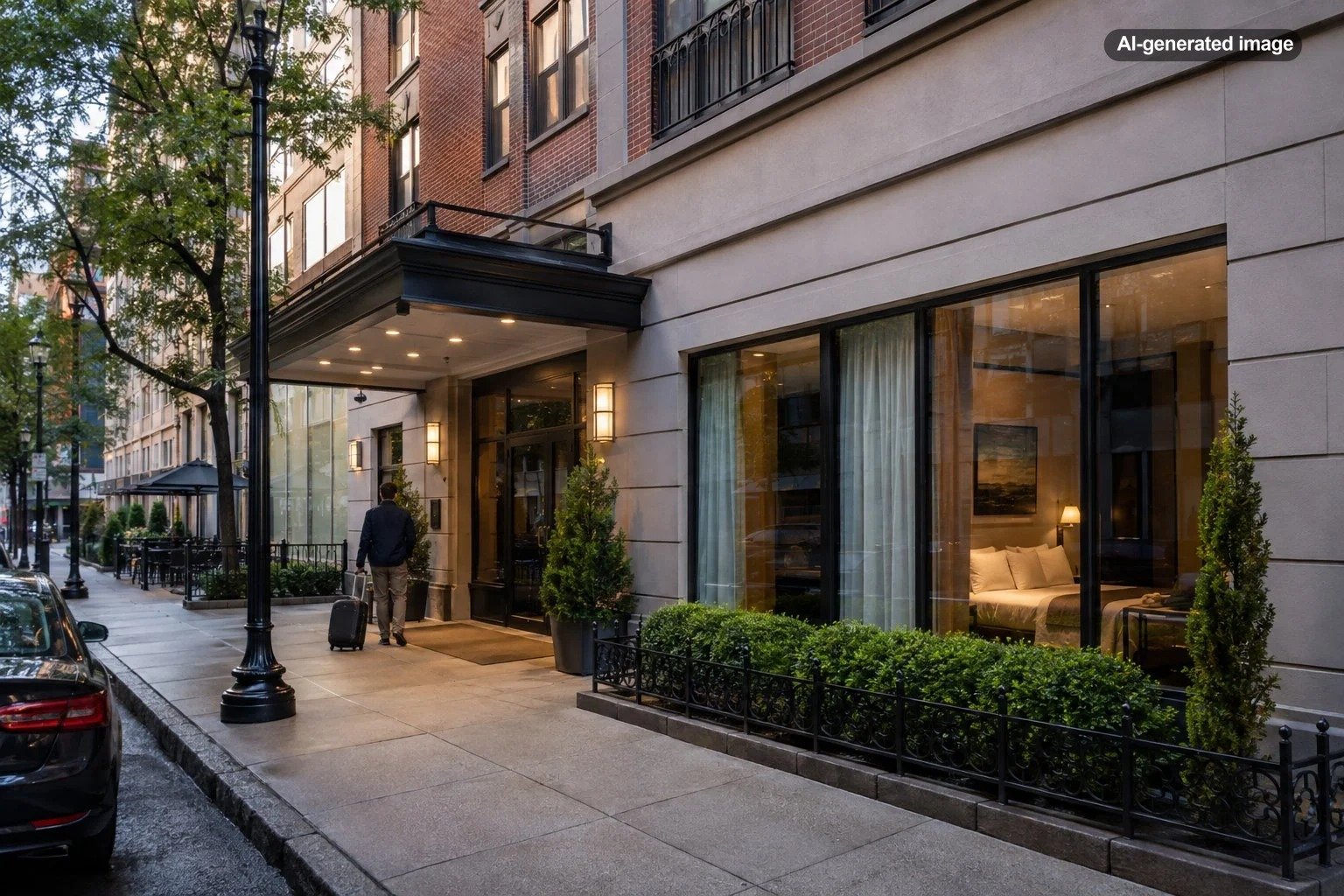
The main concern is usually accessibility from outside. A room overlooking an enclosed courtyard is quite different from one with a sliding door beside a publicly accessible walkway. Likewise, a street-facing window at pedestrian level creates different privacy considerations than a window several stories above the street.
The U.S. Department of State advises travelers to make sure hotel doors and windows lock properly and that curtains close fully. Those checks are sensible on any floor, but they deserve particular attention when someone outside can physically approach a window, balcony, terrace, or secondary door.
Ground-floor rooms can also make occupancy more visible. If curtains remain open, passersby may be able to see luggage, electronics, or whether someone is inside. Noise may be another issue when a room is near an entrance, lobby, parking area, elevator bank, pool, restaurant, or pedestrian route.
Why a ground-floor room can be genuinely convenient
There are situations where a lower-floor room is not merely a preference but a practical advantage. Travelers with mobility limitations may want to minimize dependence on stairs or elevators. Families managing young children and strollers may appreciate easier movement between the room and common areas. Travelers carrying sports equipment, several bags, or mobility devices may also find a short route useful.
Fire and evacuation planning can be another consideration. The U.S. Fire Administration emphasizes knowing the evacuation plan and locating the closest exits after checking into a hotel. Its guidance for people with disabilities also notes that being on the ground floor or near an exit can make emergency escape easier in some circumstances.
That does not mean every ground-floor room has a better emergency route. Hotel layouts vary considerably. A room at the far end of a sprawling first-floor corridor may be less convenient than an upper-floor room located close to a protected stairwell. What matters is the actual route rather than the number printed beside the elevator button.
Compare the tradeoffs before deciding
| Consideration | Ground floor | Upper floor |
|---|---|---|
| Outside accessibility | May be easier for someone outside to approach windows or patio doors | Usually less direct pedestrian access to windows |
| Privacy | Can require more attention to curtains and outdoor sightlines | Often less exposed to people immediately outside |
| Mobility | Can reduce reliance on elevators or stairs | May require elevator or stair use |
| Noise | May be closer to entrances, parking, pools, or common areas | May be farther from street-level activity, depending on layout |
| Emergency exit | Can provide a short route outside in some buildings | Requires understanding the nearest stair and evacuation route |
The room’s exact location matters more than the label
Two rooms described as ground-floor rooms can present completely different experiences. Before deciding that the floor itself is a problem, consider what actually surrounds the room.
A room facing an interior courtyard
An enclosed or controlled-access courtyard may have limited public traffic. Privacy and noise could therefore be less of a concern than they would be beside a sidewalk or parking lot.
A room with a patio or exterior door
A patio can be convenient, but it adds another potential access point. Check that the door closes securely and that its lock operates normally. Do the same for any window that opens.
A room near the lobby or main entrance
This location may feel reassuring to travelers who prefer being near staffed areas, but it can also bring elevator noise, conversations, luggage movement, and late arrivals.
A room beside a pool, parking area, or walkway
These locations may experience more foot traffic and reduced privacy. Keeping curtains closed becomes especially important when people can pass close to the glass.
What to check immediately after entering the room
A quick inspection can tell you more than the floor number. The State Department recommends checking room doors and windows, privacy coverings, emergency equipment, and the evacuation route.
- Close and lock the main door, then confirm that the lock and secondary security device function normally.
- Check every accessible window and exterior door rather than assuming it is secured.
- Close the curtains or shades completely and look for gaps that compromise privacy.
- Read the emergency evacuation diagram posted in the room.
- Locate the nearest exits rather than relying only on the route you used when arriving.
- Make sure the room telephone works or that you otherwise know how to contact the front desk.
- If anything appears damaged or does not lock correctly, notify hotel staff promptly.
You do not need to diagnose whether a lock is technically defective. If a door or window does not appear to secure normally, requesting assistance or another room is a reasonable response.
Who may prefer an upper-floor room?
Travelers who prioritize privacy may feel more comfortable above pedestrian level, particularly when traveling alone. An upper floor can also be preferable when ground-level rooms face a busy street, parking area, entertainment space, or pool.
Some travelers simply sleep better when they know a stranger cannot walk directly up to their window. That preference does not establish that an upper floor is universally safer, but personal comfort is still relevant. A room that leaves you repeatedly checking the curtains or worrying about exterior access may not be the right room for your stay.
Who may prefer the ground floor?
A ground-floor room can be a strong fit for travelers who have difficulty with stairs, want a straightforward evacuation route, travel with mobility equipment, or expect to enter and leave the hotel frequently. Parents managing children and substantial luggage may appreciate the reduced dependence on elevators as well.
Travelers with accessibility needs should confirm specific accommodations directly with the property rather than assuming that every room on the lowest floor is accessible. A ground-floor location and an accessible room are not necessarily the same thing.
What travelers often overlook
Emergency planning deserves as much attention as intrusion concerns. Travelers sometimes choose an upper floor because it feels more private without considering how they would evacuate. The U.S. Fire Administration recommends identifying the two closest exits and becoming familiar with the hotel’s evacuation plan.
Floor number is only one layer of security. Controlled building access, functioning locks, staffed public areas, room placement, exterior exposure, and your own awareness all matter. A well-positioned first-floor room inside a controlled-access building may feel more comfortable than a higher room reached through an isolated exterior corridor.
You can evaluate the room after arrival. Hotel assignments are not always obvious from a booking confirmation. If the actual location presents a privacy, accessibility, noise, or security concern, explain the issue to the front desk and ask whether another available room can be offered.
FAQ
Should solo travelers avoid ground-floor hotel rooms?
Not as an absolute rule. Solo travelers may prefer a room that is less accessible from outside, but the appropriate choice depends on the property’s design, access controls, locks, surrounding area, and the traveler’s comfort level.
Is a hotel room on the second floor safer?
It may provide more separation from pedestrian-level exterior access, but that alone does not establish that it is safer. Room security depends on multiple factors, including locks, building access, location, staffing, and emergency planning.
Are ground-floor rooms better for travelers with limited mobility?
They can be, particularly when they reduce dependence on stairs or elevators. Travelers who need accessible features should still confirm those features directly with the hotel before arrival.
What if my ground-floor window does not lock?
Contact the front desk promptly and request that the problem be addressed or ask whether another suitable room is available. A window or exterior door that is intended to lock should not simply be ignored.
Can I request a room on a specific floor?
You can ask the hotel about a floor preference before or during your stay, although room assignments and availability vary by property. If your request relates to mobility or another accessibility need, communicate the specific requirement rather than relying only on a preferred floor number.
Bottom line
A ground-floor hotel room involves a tradeoff, not a universal safety verdict. It may offer easier access and a simpler emergency route while also exposing windows or exterior doors to more pedestrian traffic. Inspect the actual room, confirm that doors and windows secure properly, understand the evacuation route, and consider whether the surrounding location gives you the level of privacy and convenience you want.
The best floor is the one that combines appropriate room security, a practical emergency plan, and a layout that works for the traveler using it.