Where to Stay in Barcelona for Beaches and Sightseeing Without Party Noise
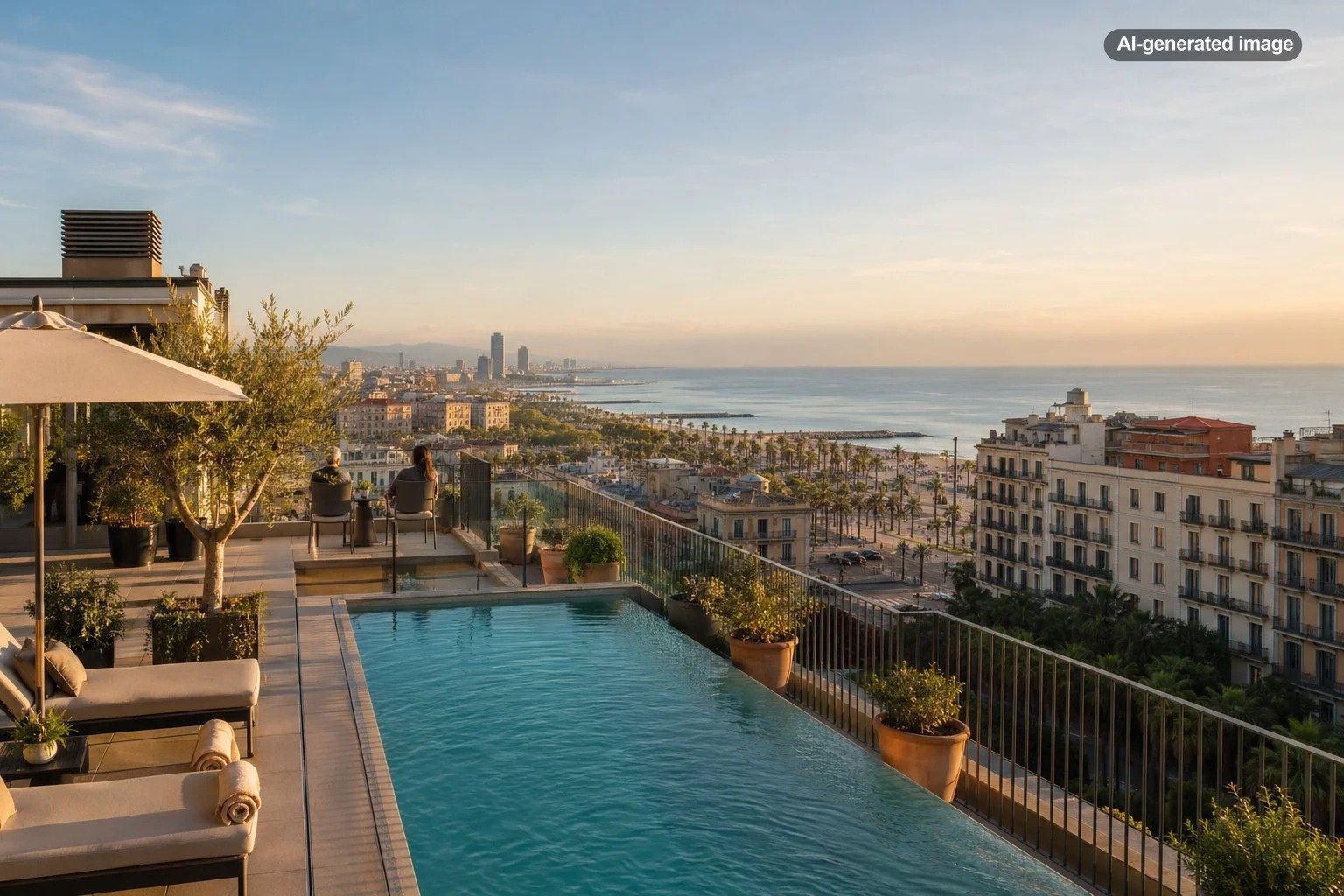
If you want Barcelona’s beaches and major sights without making nightlife the center of your trip, the strongest strategy is to stay either around Port Vell and the quieter edges of the historic center or near the waterfront east of Barceloneta. These locations keep the Mediterranean and old-city attractions reasonably accessible while giving you alternatives to the busiest nightlife corridors.
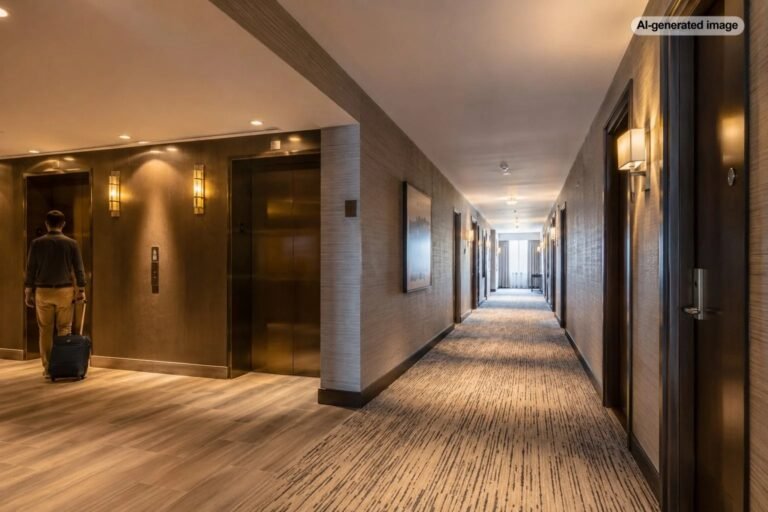
No hotel in a major city can guarantee silence. Street orientation, room position, nearby restaurants, seasonal events, and other guests can all affect noise. For travelers who prioritize sleep, it is worth requesting a room away from elevators, rooftop venues, major streets, and late-night gathering areas when the hotel can accommodate that preference.
Quick answer: eight hotels worth considering
- Sofitel Barcelona Skipper: strongest fit for travelers who want the beach to be a major part of the trip without giving up straightforward access to central Barcelona.
- H10 Port Vell: a balanced harbor-side choice between the waterfront and El Born.
- Hotel Barcelona Catedral: especially useful for sightseeing-first travelers who value a pedestrian setting and explicitly marketed soundproofed rooms.
- H10 Madison: a central historic-district base close to the Cathedral and within reach of the waterfront.
- Catalonia Magdalenes: a compact central option for travelers who want historic Barcelona at the doorstep.
- Yurbban Passage Hotel & Spa: a city-center retreat with a relaxation-oriented positioning and convenient access to several districts.
- Ohla Barcelona: an upscale option between the Cathedral and Palau de la Musica for sightseeing-focused stays.
- Hotel 1898: an option directly on La Rambla for travelers who prioritize central sightseeing and are willing to choose room location carefully.
Planning snapshot
- Best overall balance: Port Vell and the western edge of the waterfront.
- Best for frequent beach time: the waterfront around Barceloneta and the Olympic seafront.
- Best for sightseeing on foot: the Cathedral area and adjacent parts of the Gothic Quarter.
- Best strategy for quieter nights: favor hotels on calmer streets or properties offering interior-facing or soundproofed room options, and avoid assuming that an entire neighborhood is uniformly quiet.
- Rental car: generally unnecessary for a city-focused Barcelona stay because central attractions and the waterfront can be combined with walking and public transportation.
1. Sofitel Barcelona Skipper
Best for: travelers who want a genuine beach-and-city combination rather than treating the beach as an occasional excursion.
Sofitel Barcelona Skipper is on Avinguda del Litoral near the Barceloneta waterfront. Its official site positions the property specifically around its seaside location while still presenting it as a base for urban exploration. That makes it one of the clearest choices when swimming, walking along the Mediterranean, or spending substantial time by the water matters almost as much as sightseeing.
The practical tradeoff is that a waterfront location is not the same as being in the middle of the Gothic Quarter. Historic sights are farther away than they would be from a Cathedral-area hotel, so you should expect more use of transit, taxis, or longer walks. For travelers trying to avoid nightlife noise, also remember that the seafront can become lively; requesting a room location suited to your sleep preferences is still sensible.
2. H10 Port Vell
Best for: travelers who want to split their time between the harbor, El Born, the old city, and the beach.
H10 Port Vell overlooks Port Vell and sits close to El Born. This location is particularly useful because it occupies the transition between maritime Barcelona and the medieval core. You can spend one part of the day around the harbor and waterfront, then move toward Santa Maria del Mar, the Gothic Quarter, or central sightseeing without starting from a distant beachfront district.
The hotel is more harbor-oriented than beach-fronting, so travelers whose main objective is stepping directly onto the sand may prefer Sofitel Barcelona Skipper. Its advantage is balance: it reduces the feeling that you must choose either historic Barcelona or the waterfront.
3. Hotel Barcelona Catedral
Best for: sightseeing-focused travelers who want a central location with unusually explicit attention to rest.
Hotel Barcelona Catedral is beside Barcelona Cathedral in the Gothic Quarter. Its official website describes its immediate setting as a quiet pedestrian area and specifically references soundproofed rooms. Those are meaningful characteristics for someone who wants historic Barcelona without intentionally choosing a nightlife-oriented stay.
This is primarily a sightseeing base rather than a beach hotel. The Cathedral, Pla�a del Rei, La Rambla, Santa Maria del Mar, and other old-city attractions are convenient from here, while the waterfront can be reached separately when you want beach time.
The central location remains a tradeoff: the Gothic Quarter attracts substantial visitor traffic, and conditions can vary by street and time. The hotel’s pedestrian setting and soundproofing are useful advantages, but they should not be interpreted as a guarantee of silence.
4. H10 Madison
Best for: first-time visitors who want classic Barcelona sightseeing to take priority while keeping the seafront within reach.
H10 Madison is just a short distance from Barcelona Cathedral. The hotel’s official information highlights its proximity to Les Rambles, Passeig de Gracia, El Born, and the seafront promenade. That combination works well for travelers who expect to spend most days exploring architecture, museums, historic streets, and restaurants but still want convenient access toward the Mediterranean.
Compared with a Barceloneta hotel, the beach requires more effort. In exchange, many central sights are easier to reach. The rooftop is another factor to consider when choosing a room: travelers who are especially noise-sensitive can ask whether a room away from rooftop or common-area activity is available.
5. Catalonia Magdalenes
Best for: travelers who want a compact historic-center base and plan to visit the beach as one component of a broader city trip.
Catalonia Magdalenes is in the Gothic Quarter between Portal de l’Angel and Via Laietana, close to Pla�a Catalunya, La Rambla, and the Cathedral area. This is a practical position for travelers who want to leave the hotel and immediately begin sightseeing rather than commute into the historic center each morning.
The beach is not outside the door, so this is a city-first choice. It makes the most sense if your itinerary contains architecture, historic streets, shopping, museums, and dining alongside one or two beach sessions. As elsewhere in central Barcelona, room orientation can matter more to sleep quality than the neighborhood label alone.
6. Yurbban Passage Hotel & Spa
Best for: couples and travelers who want a polished central retreat after busy sightseeing days.
Yurbban Passage Hotel & Spa is on Carrer de Trafalgar. Its official site emphasizes the hotel’s historic setting, rooftop views, spa, and a relaxation-focused atmosphere. The location is useful for moving between the Gothic Quarter, El Born, Pla�a Catalunya, and Eixample without committing entirely to the narrow streets of the oldest districts.
This is another sightseeing-first rather than beach-first selection. Its appeal for this particular trip style is the ability to explore central Barcelona during the day and return to a property deliberately positioned around relaxation. Travelers should still verify the most appropriate room location if nighttime quiet is a major booking criterion.
7. Ohla Barcelona
Best for: upscale city travelers who want cultural attractions close by and are comfortable traveling separately to the beach.
Ohla Barcelona is on Via Laietana between the Palau de la Musica and Barcelona Cathedral. That places it in a particularly useful corridor for historic sightseeing, with El Born and the Gothic Quarter close at hand.
The location is much more about city access than sand. Choose it if your ideal Barcelona day begins with architecture, museums, markets, and old streets, with the beach as a later excursion. Via Laietana is an important city street, so guests who are sensitive to traffic or urban noise should consider asking about quieter room orientations rather than assuming every room will feel equally removed from the city.
8. Hotel 1898
Best for: travelers who want La Rambla immediately outside and are prepared to be deliberate about room selection.
Hotel 1898 occupies a historic building at La Rambla 109. Its official room information distinguishes between street-facing accommodations and rooms oriented toward the building’s interior patio. That distinction is especially relevant to travelers concerned about noise.
This is the most obvious compromise on the list. La Rambla provides exceptional central positioning for sightseeing but is also one of Barcelona’s busiest visitor corridors. If minimizing nighttime activity around the hotel is your highest priority, another property may be a better fit. If location is more important, an interior-facing room can be worth considering subject to availability.
Which Barcelona area gives you the best balance?
| Area | Beach convenience | Sightseeing convenience | Main tradeoff |
|---|---|---|---|
| Barceloneta / Olympic waterfront | Excellent | Moderate | Waterfront areas can become lively, and some historic sights require additional travel. |
| Port Vell | Good | Very good | Not directly on the main swimming beaches. |
| Cathedral / Gothic Quarter edge | Moderate | Excellent | Central pedestrian traffic and nearby activity vary significantly by street. |
| La Rambla | Moderate | Excellent | Busy surroundings make careful room selection particularly important. |
How to reduce the chance of party noise
Do not rely only on a neighborhood name. Barcelona’s central districts can change character within a few blocks, and a room facing an interior courtyard can feel very different from one facing a major street.
- Ask for an interior-facing room when that room category exists.
- Ask whether the room is near a rooftop bar, elevator, stairwell, or other late-use common area.
- Consider the hotel’s immediate street rather than judging the entire Gothic Quarter, El Born, or Barceloneta as uniformly quiet or noisy.
- If sleep is the overriding priority, favor a slightly less prominent street over a room directly on a famous boulevard.
- Check current event calendars near your travel dates because festivals, concerts, sporting events, and seasonal activity can temporarily change nighttime conditions.
What travelers often overlook
The most famous beach is not automatically the best place to sleep. Barcelona’s official tourism information describes a coastline extending beyond Barceloneta toward the Olympic Marina and other beaches. Travelers can therefore stay in a more sightseeing-friendly location and treat the waterfront as a short outing rather than designing the entire trip around a beachfront hotel.
The opposite is also true. If you expect to swim every morning and walk the promenade every evening, repeatedly traveling from the Gothic Quarter to the shore can become tedious. In that case, paying for a waterfront location may improve the trip more than maximizing proximity to every historic attraction.
FAQ
Is Barceloneta a good place to stay if I want quiet nights?
It can work, but choose carefully. Barceloneta is one of the city’s best-known seaside districts and contains restaurants, bars, beaches, and substantial visitor activity. A well-positioned hotel and suitable room orientation are more useful indicators than assuming the entire neighborhood will be quiet.
Should I stay near the beach or in the Gothic Quarter?
Stay near the beach if you plan to use the waterfront nearly every day. Choose the Gothic Quarter or its edge if historic sightseeing, museums, architecture, and walking through central Barcelona make up most of your itinerary.
Is Port Vell a good compromise?
Yes. Port Vell sits between the old city and Barcelona’s maritime districts, making it one of the more practical compromises for travelers who want both sides of the city without being directly in the busiest part of the beachfront.
Do I need a rental car for this type of Barcelona trip?
Usually not for a city-focused itinerary. Walking and public transportation are generally more compatible with sightseeing in the dense central districts, while parking and urban driving can add complexity. A car becomes more relevant if Barcelona is only one part of a wider regional road trip.
What is the strongest overall choice?
For frequent beach time, Sofitel Barcelona Skipper has the clearest waterfront advantage. For a more even balance between maritime Barcelona and historic sightseeing, H10 Port Vell is particularly well positioned. For sightseeing-first travelers concerned about rest, Hotel Barcelona Catedral deserves special consideration because its official site specifically highlights its quiet pedestrian setting and soundproofed rooms.
Sources & further reading
- Sofitel Barcelona Skipper official website
- H10 Port Vell official website
- Hotel Barcelona Catedral official website
- H10 Madison official website
- Catalonia Magdalenes official website
- Yurbban Passage Hotel & Spa official website
- Ohla Barcelona official website
- Hotel 1898 official website
- Barcelona Tourism: Maritime Barcelona