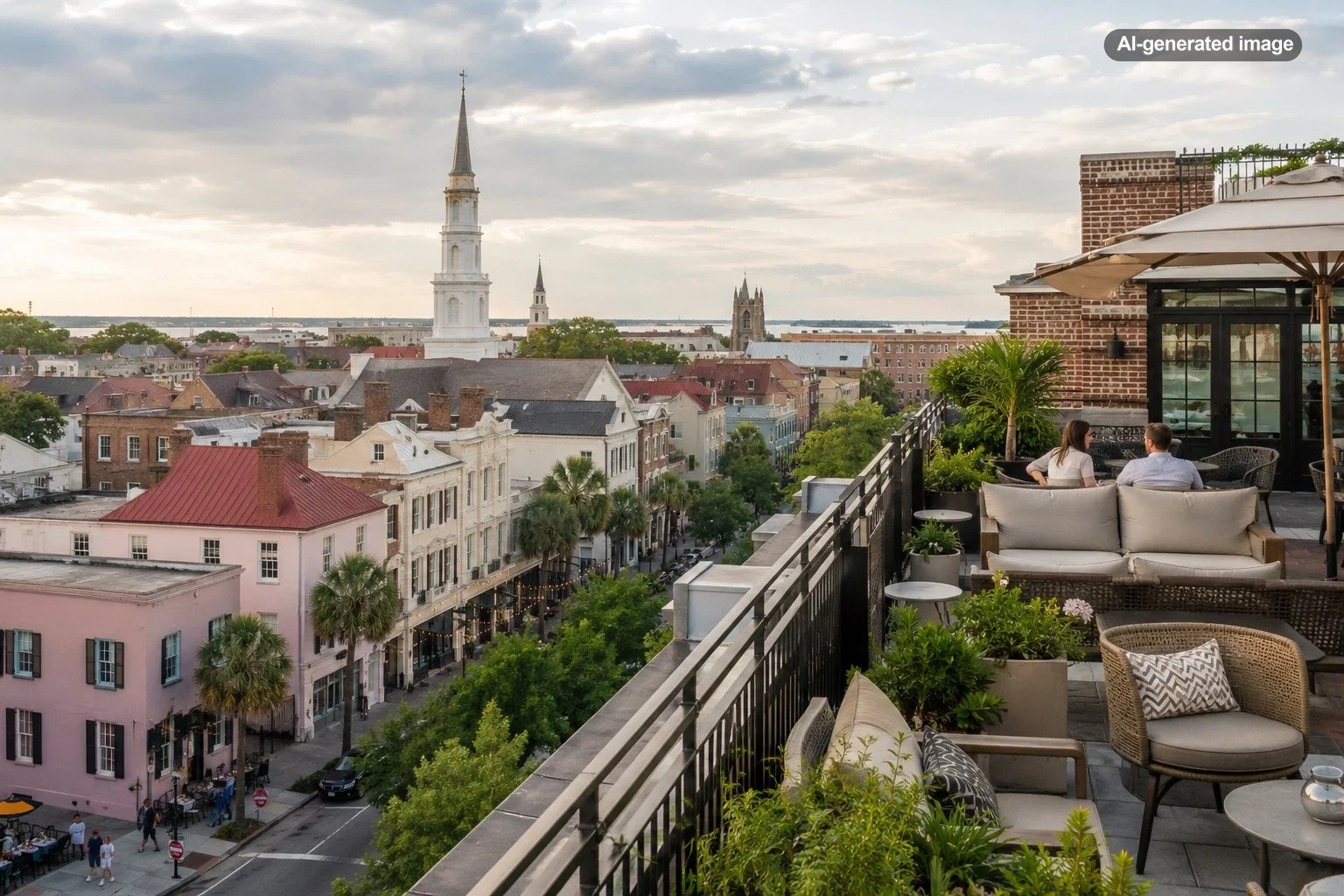
Where to Stay in Charleston for Walkability, History, and Great Restaurants
For travelers who want to experience Charleston primarily on foot, the strongest place to stay is the historic downtown peninsula, especially around the French Quarter, City Market, lower Meeting Street, and the central King Street corridor. This puts a dense mix of historic streets, museums, churches, restaurants, galleries, shops, and waterfront scenery within a relatively compact area.
The best hotel, however, depends on which part of that experience matters most. A property beside the City Market makes sightseeing and dining exceptionally convenient, while a hotel farther north near Marion Square gives easier access to upper King Street restaurants. A mansion hotel on a quieter residential block provides more historic atmosphere but may add walking time to some evening destinations.
Quick planning snapshot
- Best area for a first visit: the Historic District around the French Quarter, City Market, and lower Meeting Street.
- Best for restaurant access: the City Market, King Street, and central Meeting Street corridors.
- Best for historic atmosphere: the French Quarter and residential streets south and west of the busiest commercial blocks.
- Car necessity: generally low for travelers concentrating on the historic downtown peninsula. Charleston’s tourism bureau describes the Historic District as highly walkable, with many attractions, restaurants, and shops within a few blocks.
- Main tradeoff: the most central locations can feel busier, while quieter historic locations may require slightly longer walks.
The Charleston Place
Best for: first-time visitors who want an upscale, highly central base with dining, shopping, and historic sightseeing in several directions.
The Charleston Place sits in the heart of the Historic District, close to the City Market, King Street, galleries, museums, shops, and historic streets. Its location is particularly useful for travelers who dislike planning transportation around dinner reservations or want to return to the hotel between sightseeing stops. The property also offers its own dining and wellness options, which can be useful when weather or fatigue changes the day’s plans.
Tradeoff: this is a substantial luxury hotel in a busy part of downtown rather than a small historic inn. Travelers looking for an intimate residential atmosphere may prefer one of Charleston’s boutique properties.
Planters Inn
Best for: travelers who prioritize historic character, City Market access, and being able to walk to dinner.
Planters Inn overlooks Charleston City Market at 112 North Market Street, with King Street about a block away. The hotel emphasizes its central Historic District setting and positions itself as a base from which guests can explore Charleston on foot. Its preserved architecture and traditional interiors make it a particularly logical choice for visitors who want their lodging to feel connected to the city’s historic identity.
Its location also makes the evening routine simple: travelers can spend the afternoon sightseeing, return to the room, and then head back out on foot for restaurants and bars.
Tradeoff: the Market Street area is one of downtown’s active visitor zones. Guests who place a higher priority on a quieter residential setting may prefer Wentworth Mansion.
The Spectator Hotel
Best for: couples and boutique-hotel travelers who want the French Quarter, City Market, waterfront, and restaurants close at hand.
The Spectator Hotel is at 67 State Street, one block from Charleston City Market and close to Market Street, King Street, Waterfront Park, and Rainbow Row. That makes it one of the more convenient choices for combining sightseeing with restaurant hopping without repeatedly arranging rides.
The hotel’s Jazz Age-inspired style and small-scale luxury positioning give it a distinctly different feel from Charleston’s larger full-service hotels. The property also highlights personal butler service and breakfast delivered to guest rooms.
Tradeoff: travelers who want a large resort-style collection of on-site facilities may find a bigger hotel more suitable. The appeal here is intimacy and location.
HarbourView Inn
Best for: visitors who want easy access to Waterfront Park and the lower Historic District while staying in a smaller inn.
HarbourView Inn is at 2 Vendue Range, placing guests near Charleston’s waterfront as well as historic streets, restaurants, galleries, and the City Market area. Its location works especially well for travelers who expect to spend mornings or evenings walking along the harbor and still want straightforward pedestrian access to the core sightseeing zone.
The inn has a private rooftop terrace and does not operate an on-site restaurant, which can actually suit food-focused travelers who already plan to explore Charleston’s restaurant scene.
Tradeoff: travelers whose dining plans revolve heavily around upper King Street will have longer walks than guests staying near Marion Square.
Hotel Bennett
Best for: travelers who want luxury accommodations near Marion Square and the restaurants, nightlife, and shopping of upper King Street.
Hotel Bennett occupies 404 King Street at Marion Square. Its position makes it particularly practical for travelers whose Charleston plans lean toward King Street dining and shopping while still including walks south into the older portions of the Historic District. The property itself includes several dining and lounge options, providing useful alternatives when guests do not want to leave the hotel for every meal or drink.
This is also a sensible choice for visitors who prefer the energy of the northern side of the main downtown visitor corridor over the denser City Market and French Quarter blocks.
Tradeoff: landmarks in the southern reaches of the peninsula require a longer walk than they would from a French Quarter hotel.
The Dewberry Charleston
Best for: design-conscious travelers who want a refined luxury stay near Marion Square with convenient access to King Street.
The Dewberry is at 334 Meeting Street, in a restored mid-century federal building near Marion Square. The location creates a useful balance: upper King Street is close, while much of historic downtown remains accessible on foot. The hotel’s aesthetic is intentionally different from Charleston’s traditional mansion and antebellum-inspired accommodations, making it appealing to travelers who like the city but prefer more restrained, modern design.
Tradeoff: travelers who imagine their Charleston hotel as a 19th-century inn or mansion may find Planters Inn or Wentworth Mansion more aligned with that expectation.
Mills House Charleston, Curio Collection by Hilton
Best for: visitors who want a central Meeting Street location with easy walking access to both historic sights and restaurants.
Mills House is at 115 Meeting Street, near the intersection of Queen and Meeting Streets. That places it in a particularly useful section of the Historic District for travelers who want to walk south toward residential architecture and historic landmarks, east toward the waterfront, or north toward the City Market and commercial areas.
The hotel combines a long Charleston history with contemporary accommodations and includes on-site dining and a seasonal rooftop pool. Its position is arguably its greatest practical advantage for a visitor building days around walking.
Tradeoff: guests seeking the very small scale of a boutique inn may prefer HarbourView Inn or The Spectator.
Wentworth Mansion
Best for: travelers who value historic architecture, a quieter setting, and a more residential sense of Charleston.
Wentworth Mansion is a 21-room historic hotel at 149 Wentworth Street. Built in 1886, the mansion retains substantial period character and sits away from the busiest Market Street blocks while remaining within walking distance of downtown restaurants and historic attractions. Its location is well suited to travelers who consider the walk itself part of the experience and enjoy passing residential streets, gardens, churches, and historic architecture along the way.
The property includes breakfast at Circa 1886, located in the mansion’s original carriage house, giving food-focused guests an appealing dining option without leaving the property.
Tradeoff: it is not as immediately surrounded by the City Market and French Quarter activity as Planters Inn, The Spectator, or HarbourView Inn. That extra separation is an advantage for some travelers and an inconvenience for others.
Charleston hotel comparison at a glance
| Hotel | Best fit | Location advantage | Main tradeoff |
|---|---|---|---|
| The Charleston Place | First visits and full-service luxury | Central to Market and King Street | Large, busy luxury-hotel atmosphere |
| Planters Inn | Historic atmosphere | Overlooks City Market | Busy visitor area |
| The Spectator Hotel | Couples and boutique stays | French Quarter and Market access | Fewer resort-style facilities |
| HarbourView Inn | Waterfront-oriented visits | Near Waterfront Park | Farther from upper King Street |
| Hotel Bennett | Upper King dining and luxury | King Street at Marion Square | Longer walk to southern landmarks |
| The Dewberry | Modern design and luxury | Near Marion Square | Less traditional historic styling |
| Mills House | Balanced sightseeing base | Central Meeting Street position | Larger than an intimate inn |
| Wentworth Mansion | Quiet historic character | Residential downtown setting | Longer walk to Market Street |
How to choose the right part of downtown Charleston
Choose the French Quarter or City Market area for maximum convenience
If the goal is to leave the hotel in the morning and spend most of the day walking, the blocks around City Market, State Street, Meeting Street, and East Bay Street are difficult to beat. Planters Inn, The Spectator, HarbourView Inn, and The Charleston Place all make it easy to build a day around short walking segments rather than transportation.
Choose Marion Square and upper King Street for restaurants and nightlife
Hotel Bennett and The Dewberry make sense when dining, bars, shops, and the northern end of King Street are major priorities. Historic sightseeing remains accessible, but guests should expect somewhat longer walks toward Rainbow Row, The Battery, and the southern peninsula.
Choose a quieter residential location for atmosphere
Wentworth Mansion suits travelers who would rather wake up on a quieter historic street than directly beside a major commercial attraction. The tradeoff is simple: more atmosphere and separation from crowds in exchange for additional walking.
Do you need a rental car in Charleston?
Not necessarily. If the trip is centered on the Historic District, many travelers can explore downtown primarily on foot. Charleston’s tourism bureau also points visitors to the free CARTA Downtown Area Shuttle for getting around the peninsula.
A car becomes more useful when the itinerary extends beyond downtown to beaches, plantations, suburban restaurants, or other parts of the Lowcountry. If most of the trip will remain inside the walkable historic core, parking and valet arrangements can add complexity without providing much benefit.
What travelers often overlook
Walkability is not identical to proximity. A hotel can be technically walkable to many attractions while still adding substantial mileage over several days. Travelers with limited mobility or a preference for frequent hotel breaks should prioritize the exact cluster of places they expect to visit most.
Restaurant geography matters. Charleston’s dining scene is spread across downtown. Staying by the City Market is excellent for the French Quarter and lower peninsula, while staying around Marion Square can be more convenient for upper King Street.
Historic character varies widely. A restored mansion, an intimate inn, a mid-century landmark, and a large luxury hotel can all occupy excellent downtown locations while producing very different stays. Decide whether history is something you mainly want outside the hotel or part of the lodging experience itself.
Frequently asked questions
What is the best area to stay in Charleston without a car?
The Historic District is the most practical choice, particularly around the French Quarter, City Market, Meeting Street, and King Street. Staying in this zone keeps a large concentration of restaurants, shops, historic sites, and waterfront areas accessible on foot.
Is the French Quarter a good area for first-time visitors?
Yes. Its combination of historic streets, central attractions, restaurant access, and proximity to the waterfront makes it especially convenient for a first visit. The main tradeoff is that central blocks can be busy.
Should food-focused travelers stay near King Street?
King Street is a strong choice, but the ideal section depends on the restaurants on the itinerary. Hotel Bennett and The Dewberry favor upper King Street access, while Planters Inn, The Charleston Place, and The Spectator provide a more central position between King Street, the City Market, and the French Quarter.
Where should couples stay for a quieter historic trip?
Wentworth Mansion is particularly appealing for travelers who want a small historic property in a calmer residential setting. The Spectator and HarbourView Inn are alternatives for couples who prefer to be closer to the French Quarter and waterfront activity.