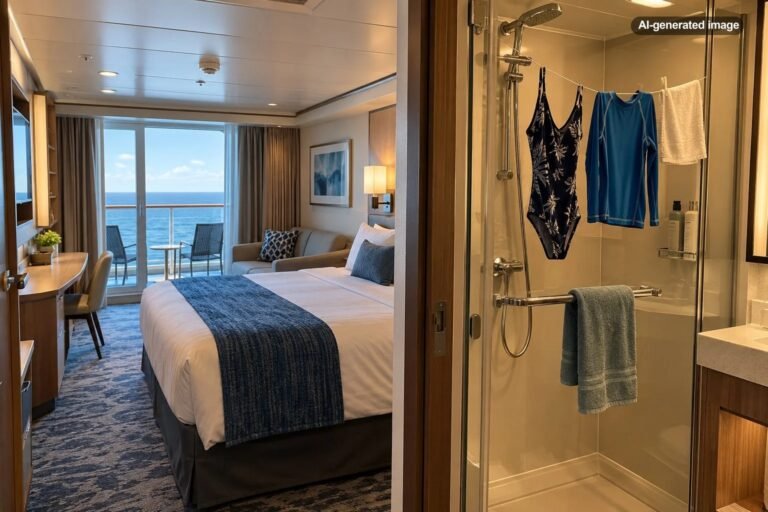
Greek Islands Cruise vs. Staying on the Islands
Choosing between a Greek Islands cruise and staying on the islands is less about deciding which vacation is better and more about deciding how you want to experience Greece. A cruise makes it comparatively easy to see several destinations while unpacking once, while an island-based trip gives you greater control over your schedule and more time to experience each place after day visitors leave.
For travelers who value variety, simplified logistics, and a structured itinerary, a cruise can be an efficient introduction to the Aegean. Travelers who care more about long meals, spontaneous beach days, evenings in island towns, and changing plans as they go will usually find a hotel-based island stay more rewarding. The differences become especially important when you compare pace, costs, transportation, dining, and how much time you actually want in each destination.
Quick answer: cruise or stay on the Greek islands?
- Choose a cruise if you want to sample multiple islands with minimal packing and transportation planning.
- Stay on the islands if you prefer slower travel, flexible days, local restaurants, and evenings ashore.
- A cruise works well for first-time samplers who want an overview before deciding which islands deserve a longer return trip.
- Independent island hopping works well for repeat visitors and travelers who enjoy choosing their own hotels, ferries, restaurants, and daily pace.
- Compare the total trip rather than the headline price. Cruise travelers may have onboard charges and shore expenses, while independent travelers separately arrange accommodations, transportation, and meals.
Greek Islands cruise vs. island stay at a glance
| Consideration | Greek Islands cruise | Staying on the islands |
|---|---|---|
| Pace | Structured and generally faster | Flexible and easier to slow down |
| Number of destinations | Often several during one sailing | Usually fewer destinations explored more deeply |
| Luggage | Unpack once | Move luggage when changing islands |
| Dining | Onboard dining plus optional meals ashore | Freedom to choose local restaurants throughout the stay |
| Evenings | Depends on the ship’s port schedule | Evenings and early mornings are yours to plan |
| Planning | Much of the transportation is bundled into the itinerary | Requires coordination of hotels and inter-island transportation |
A cruise makes seeing several islands easier
The strongest argument for cruising is logistical simplicity. Instead of checking out of hotels, transporting luggage to a ferry port, boarding a ferry, and repeating the process at the next destination, your cabin travels with you. This can be particularly appealing when the goal is to see a broad cross-section of Greek destinations rather than settle into one island.
The tradeoff is that the ship determines much of your rhythm. Port calls, arrival times, departure times, and the sequence of destinations are tied to the itinerary and can change. You may visit several well-known places, but a stop should not be confused with a full stay. A few hours ashore creates a different experience from spending three or four nights in the same community.
Affiliate disclosure: HotelInfo.com may earn a commission when you book or purchase through links on this page. This does not affect the price you pay. Learn more.
If the cruise format appeals to you, you can compare available sailings with Expedia to see how different ships and itineraries approach the Greek islands. Fares, taxes, gratuities, onboard charges, itineraries, health requirements, and cancellation terms vary, so review the details of a specific sailing before booking.
Staying on an island gives you control of your time
An island stay changes the basic unit of the vacation from a port call to a day. You can decide that a beach deserves another afternoon, linger over dinner, visit a village in the morning, or do very little at all. That freedom can matter in Greece, where the character of an island is not limited to its headline attractions.
Staying ashore also lets you experience places at different times of day. On islands that receive significant cruise traffic, the atmosphere around major sights and port areas may change as ships arrive and depart. An overnight guest has the option to explore early, return to the hotel during a busy part of the day, and go out again in the evening.
The cost of that independence is additional planning. Greece has extensive passenger ferry connections between the mainland and islands, as well as numerous inter-island routes, but the routes that make sense for one itinerary may not make sense for another. Ferry schedules also vary by route and season. A successful island-hopping trip therefore benefits from being built around realistic transportation connections rather than a wish list of islands scattered across different regions.
The biggest difference is depth versus variety
Consider a traveler interested in Santorini, Mykonos, and several other Aegean destinations. A cruise may make it possible to see a larger number of places during a single vacation. The traveler gets contrasting landscapes and towns without organizing every transfer independently. For someone with limited vacation time who enjoys waking up somewhere new, that variety has considerable appeal.
Now consider a traveler who primarily wants to understand Santorini beyond a famous viewpoint or spend several days exploring a larger island such as Crete. Staying ashore is the more natural fit. The itinerary can include unhurried meals, beach time, inland excursions, and free periods rather than being organized around the ship’s departure.
Neither approach automatically produces a more authentic trip. A cruise traveler can make thoughtful choices ashore, and an independent traveler can spend an entire vacation moving quickly between crowded highlights. The practical distinction is that staying on an island gives you more control over how deeply you explore it.
Compare total costs, not just the booking price
The two styles package expenses differently, which makes a simple price comparison misleading. A cruise fare may cover your cabin and some dining while leaving other expenses separate. Depending on the sailing, travelers may also need to consider gratuities, drinks, specialty dining, excursions, transportation in port, internet access, and other onboard purchases.
On an independent trip, accommodations, ferries or flights, local transportation, meals, activities, and incidental expenses are usually purchased separately. That creates more budgeting decisions, but it also gives travelers more ability to adjust the trip. You can select a modest hotel on one island, spend more on another, choose inexpensive meals on some days, or simply stay in fewer places to reduce transportation costs.
For that reason, compare realistic door-to-door trip totals for the same travel dates and comfort level. A bargain cruise that generates substantial additional spending ashore is not necessarily cheaper, just as an independent trip with multiple premium hotels and frequent transfers is not automatically the economical alternative.
Independent island hopping requires a smarter route
If you stay on the islands, geography matters. The Cyclades are especially associated with island hopping, and ferry operators serve numerous connections in the region. Building a trip around islands that connect naturally is generally more practical than trying to combine far-flung destinations simply because each looks appealing individually.
Allow breathing room in the itinerary. Changing islands every day or two can turn a hotel-based vacation into a sequence of checkouts, ports, and luggage transfers. For many travelers, choosing two or three compatible bases and exploring them properly creates a better balance between variety and relaxation.
It is also sensible to avoid building an inflexible chain of important commitments immediately after a ferry transfer. Transportation details can change, and sea conditions can affect travel. Verify current schedules directly with transportation providers when finalizing the trip.
Cruises are easier for travelers who dislike constant repacking
One of cruising’s most practical advantages is surprisingly simple: your belongings stay in the same room. Families, travelers carrying more luggage, and anyone who dislikes repeated hotel check-ins may appreciate this more than another destination on the itinerary.
A cruise also removes much of the work involved in coordinating transportation between islands. You still need to plan how to reach the embarkation point and decide what to do during port calls, but the major overnight movements are handled by the ship.
Independent travelers should consider packing lightly if they plan to change islands several times. Moving through ports, boarding ferries, and reaching accommodations is more pleasant when each person can manage their own luggage comfortably.
Staying ashore gives dining and nightlife more flexibility
A cruise provides the convenience of returning to a familiar dining environment, which can be valuable for families and travelers who appreciate predictable options. At the same time, meals are one of the pleasures of spending several nights on an island. An independent traveler can choose restaurants without worrying that dinner conflicts with an evening departure.
The same distinction applies after dark. If your ship remains in port late, you may have time for an evening ashore, but that depends entirely on the itinerary. Hotel guests can decide when the day ends. That makes island stays particularly appealing to travelers interested in leisurely dinners, nightlife, evening walks, or simply sitting on a terrace after the day’s sightseeing has finished.
A hybrid trip can offer the best balance
You do not necessarily have to choose one format for the entire vacation. A cruise can provide an efficient survey of several destinations, followed by a longer hotel stay on an island that deserves more attention. Another approach is to spend time in Athens or on an island before embarking, rather than flying in and immediately boarding a ship.
This format is especially useful for travelers who like cruising but dislike feeling that an especially interesting port received too little time. The cruise provides breadth, while the hotel stay provides depth.
What travelers often overlook
Port time is not the same as island time. When comparing cruise itineraries, look at the structure of each port call rather than simply counting destinations. A long list of islands can sound impressive while leaving relatively little discretionary time ashore.
Island hopping is not automatically slow travel. If you schedule too many transfers, an independent itinerary can become more hectic than a cruise. Longer stays in fewer places usually give you more opportunity to enjoy the flexibility you chose the independent trip for in the first place.
The famous islands are not interchangeable. Santorini’s volcanic caldera landscape, the cosmopolitan character associated with Mykonos, the villages and beaches of the Cyclades, and the scale and cultural depth of Crete create very different travel experiences. Decide what you actually want to do before deciding how many islands to include.
Schedules deserve final verification. Ferry routes, cruise itineraries, port calls, and operating details can change. Treat transportation information as a planning framework until you verify the details for your travel dates.
Which option is right for you?
Choose a Greek Islands cruise when your priority is seeing several destinations conveniently, unpacking once, and letting the ship handle most inter-island transportation. It is a strong fit for travelers who enjoy structured days and consider variety more important than spending several nights in each place.
Choose staying on the islands when your priority is independence. It is the better fit for travelers who want to choose their own hotels and restaurants, stay out in the evening, slow down when they find somewhere they like, and experience fewer islands in greater detail.
If you are still undecided, ask one practical question: would you rather wake up on a different island frequently, or wake up knowing the entire day belongs to you? Your answer usually reveals which version of the Greek islands will suit you better.
Frequently asked questions
Is a Greek Islands cruise better for a first trip to Greece?
It can be. A cruise offers an efficient introduction to multiple destinations and requires less inter-island planning. Travelers who already know they want an in-depth experience of one or two islands may prefer staying ashore even on a first trip.
Is it better to cruise or ferry between Greek islands?
A cruise is simpler because your accommodation moves with you. Ferries provide greater freedom to decide how many nights to spend in each destination, but you must coordinate transportation and accommodations yourself.
How many Greek islands should you visit on an independent trip?
There is no universal ideal number. The right choice depends on trip length, ferry connections, and how much time you want in each destination. Avoid adding an island simply to increase the count if doing so creates rushed transfers and very short stays.
Can you combine a cruise with a Greek island hotel stay?
Yes. Combining a sailing with several nights ashore can provide both variety and a slower island experience. It is particularly useful when one destination on or near the cruise route deserves more time than a port call allows.