What to Do If You Find Bedbugs in a Hotel Room
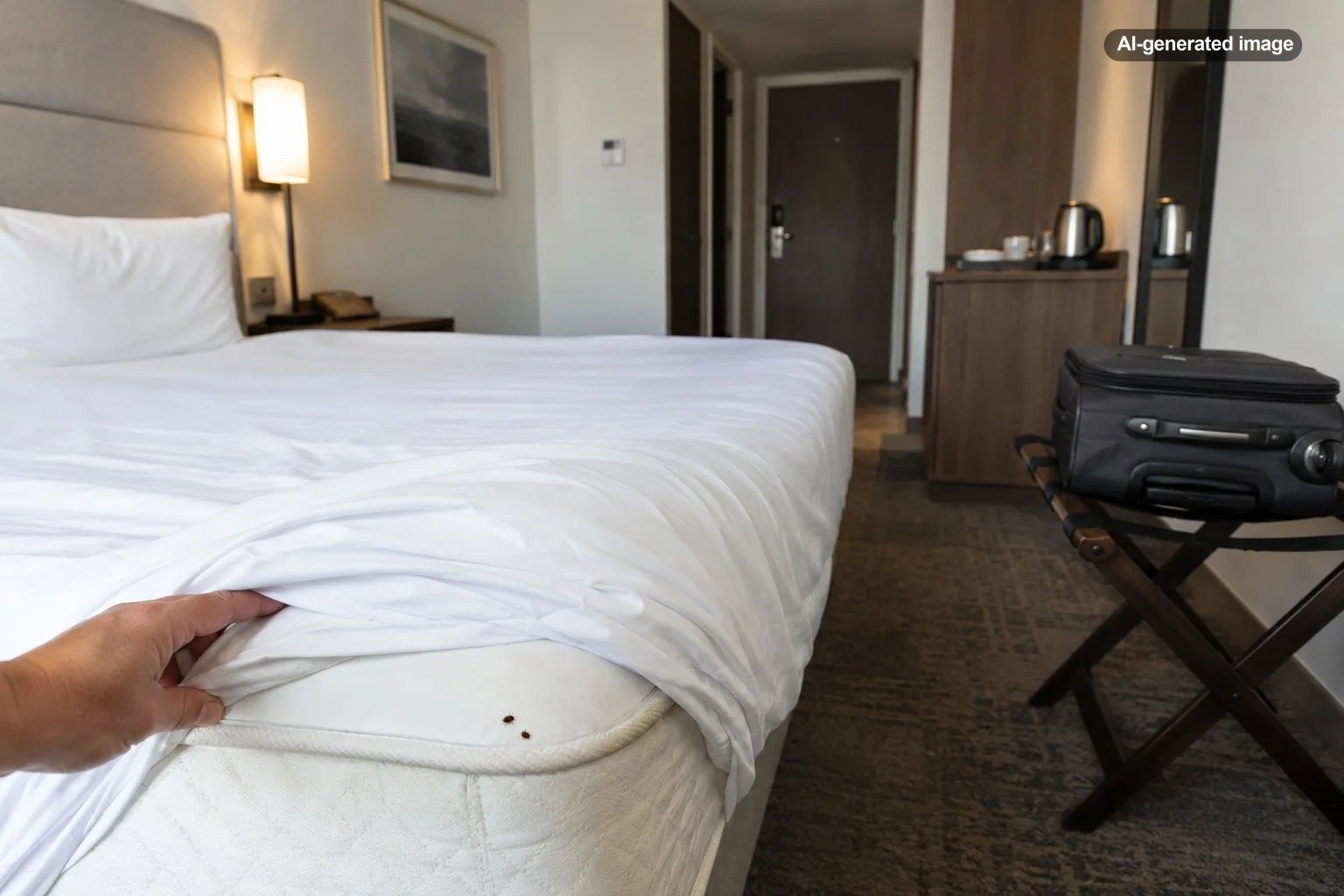
If you find what appears to be a bedbug in a hotel room, stop unpacking, move your belongings away from the bed and upholstered furniture, document what you found, and contact hotel management immediately. Do not carry loose clothing or an open suitcase through the property while the situation is being addressed.
The priority is to contain your belongings and obtain a practical resolution without spreading insects to another room, your vehicle, or your home. A visible insect is useful evidence, but bites alone do not confirm that a room has bedbugs.
Quick answer: Take these steps immediately
- Keep luggage closed and move it to a hard, non-upholstered surface away from the bed.
- Photograph the insect, stains, shed skins, or other evidence without disturbing the room unnecessarily.
- Notify the front desk and ask for a manager or another staff member who can document the report.
- Request an inspection and discuss relocation, cancellation, or other available remedies.
- Seal potentially exposed clothing and inspect and heat-treat suitable items when you return home.
First, determine whether the signs are consistent with bedbugs
Adult bedbugs are small, flat, wingless, and reddish-brown. They are often compared in size and shape to an apple seed. Younger insects can be smaller and lighter in color, making them more difficult to recognize. Bedbugs crawl rather than fly or jump.
Inspect the immediate sleeping area with a flashlight if one is available. Look along mattress seams, piping, tags, the box spring, the bed frame, and accessible portions of the headboard. Other possible signs include shed skins, dark spotting, rusty-colored stains, eggs, or live insects. Avoid dismantling hotel furniture or moving the mattress extensively, since this may scatter evidence or expose you to injury.
Bite marks are not reliable proof on their own. Reactions can appear hours or days after exposure, and bites from mosquitoes, fleas, and other insects can look similar. Some people show no visible reaction at all. Physical evidence in the room is more useful than trying to identify an infestation from skin irritation alone.
Contain your luggage before contacting the hotel
If your suitcase is still closed, keep it that way. Move it to the bathroom, an inspected luggage rack positioned away from walls, or another hard surface that is separated from the sleeping area. Do not put bags on the second bed, upholstered seating, carpet, or hallway floor.
Place loose clothing and small fabric items in sealable plastic bags if you have them. If you do not, keep the items together and avoid transferring them into drawers or another suitcase. Electronics, books, toiletry bags, and other objects with seams or crevices deserve attention too, but spraying them with an improvised pesticide can damage the items and create a health risk.
If you have already unpacked, work methodically rather than shaking clothing across the room. Bag exposed items where they are, close the suitcase, and make a simple note of which belongings were on the bed, floor, luggage rack, or upholstered furniture. This distinction can help you decide what requires treatment later.
Document the evidence clearly and calmly
Take close photographs and wider images showing where the evidence was found. If possible, include an ordinary object for scale without obscuring the insect. Record the room number, date, approximate time, and the name or position of the staff member who receives the report.
Ask a hotel representative to view the evidence in the room. A hotel may have its own inspection and incident-reporting procedures, so request written confirmation that your complaint was received. Keep copies of relevant messages, photographs, receipts, and any written resolution.
Documentation is useful even when the hotel responds promptly. It creates a clear record if you later need to discuss cleaning expenses, medical care, a refund request, or a dispute with a booking platform. It also reduces the need to rely on memory after a stressful interruption.
Ask for a resolution that limits further exposure
Hotel responses vary according to property procedures, availability, booking terms, and local requirements. Reasonable requests may include a professional inspection, relocation to a room well separated from the suspected room, cancellation of the remaining stay, or assistance finding other accommodations. Ask what the property can offer instead of assuming a particular refund or reimbursement is guaranteed.
Moving directly into an adjacent room may not provide enough separation if the original room has an established infestation. Ask how the proposed room was selected and whether it has been inspected. Before bringing your belongings inside, perform the same focused check of the mattress seams, headboard area, bed frame, and luggage rack.
If the response does not address your concerns, ask to speak with the manager on duty. Travelers who booked through a third-party platform should also contact that platform and retain the case number. Keep the conversation factual: explain what you observed, where it was found, which belongings were exposed, and what outcome you are requesting.
Do not carry unsealed belongings into another room
A room change solves the immediate sleeping problem but does not automatically remove insects from luggage or clothing. Transport sealed bags and closed suitcases rather than carrying loose garments through the hotel. Keep the luggage isolated in the new room until you can inspect or treat it properly.
Avoid relying on scented sprays, rubbing alcohol, essential oils, or excessive heat from hair dryers. These methods may be ineffective, damage property, create fire or inhalation hazards, or cause insects to scatter. Pesticides should never be applied to your skin, luggage, or a hotel room unless the product is specifically labeled for that use and the application is handled in accordance with its instructions and property procedures.
Handle suspected bites conservatively
Bedbugs are not known to spread disease to people, but their bites can cause itching, irritation, sleep disruption, and, in rare cases, an allergic reaction. Most minor reactions require only basic symptom management and good hygiene. Avoid scratching, since broken skin can lead to a secondary infection.
Consult a healthcare professional or pharmacist if itching is substantial, symptoms are worsening, or you are uncertain what caused the reaction. Seek urgent medical care for trouble breathing, facial or throat swelling, faintness, or another sign of a severe allergic response. Spreading redness, warmth, pus, fever, or increasing pain can indicate infection and also warrants medical advice.
Photographs of skin changes can help document how the reaction develops, but they should not be treated as definitive identification of bedbug bites.
Prevent bedbugs from entering your home
When you arrive home, avoid taking potentially exposed luggage into a bedroom or placing it on upholstered furniture. Unpack directly into a washing machine when practical. The U.S. Environmental Protection Agency notes that high heat in a clothes dryer kills bedbugs, while washing alone generally does not.
Follow the care labels on garments and use an appropriate high-heat dryer cycle for items that can safely tolerate it. Keep untreated items sealed until they can be evaluated. Delicate clothing, shoes, luggage, electronics, and other heat-sensitive belongings may require a different approach or advice from a pest-management professional experienced with bedbugs.
Inspect suitcase seams, pockets, zipper areas, handles, and wheels with a flashlight. Vacuuming can help remove visible insects and debris, but dispose of the vacuum contents promptly in a sealed bag outside the living area. Store luggage away from sleeping spaces rather than beneath a bed.
What travelers often overlook
Cleanliness and hotel market position do not determine whether bedbugs can appear. These insects are effective hitchhikers and may be transported in luggage, clothing, and other personal belongings. Finding them is therefore not, by itself, proof that an entire property is poorly maintained.
Travelers also tend to focus only on clothing. A backpack placed beside the bed, a fabric laptop case, or a suitcase opened on carpet may present a greater transfer concern than garments that remained sealed. Separating items by actual exposure is more useful than treating every possession as equally affected.
Finally, do not discard expensive luggage or clothing in panic. Many belongings can be inspected or treated successfully. If evidence follows you home, contact a qualified pest-management professional early rather than experimenting with multiple pesticides or moving belongings between rooms.
Frequently asked questions
Should I leave the hotel immediately?
Not necessarily, but you should stop using the room and report the evidence immediately. Whether you relocate within the property or leave depends on the hotel’s response, the separation and inspection of an alternative room, your comfort level, and available lodging.
Can I demand a refund?
You can request one, but eligibility depends on the property’s terms, the booking channel, the documented circumstances, and applicable consumer law. Ask for the proposed resolution in writing and retain your evidence.
Should I throw away my suitcase?
Usually not as a first response. Keep it isolated, inspect it carefully, and use an appropriate treatment method. A pest-management professional can advise you about materials or belongings that cannot safely be placed in a dryer.
Can bedbugs live in my clothes?
Bedbugs can hide in folds, seams, and packed belongings, although they generally remain near places where people sleep. Seal exposed clothing until it can be laundered and dried using a suitable high-heat setting.
Should I post a review before the hotel investigates?
First report the problem and preserve the evidence. If you later write a review, describe what you directly observed and how the property responded without presenting an unconfirmed bite reaction as proof of an infestation.